 Wold Cup
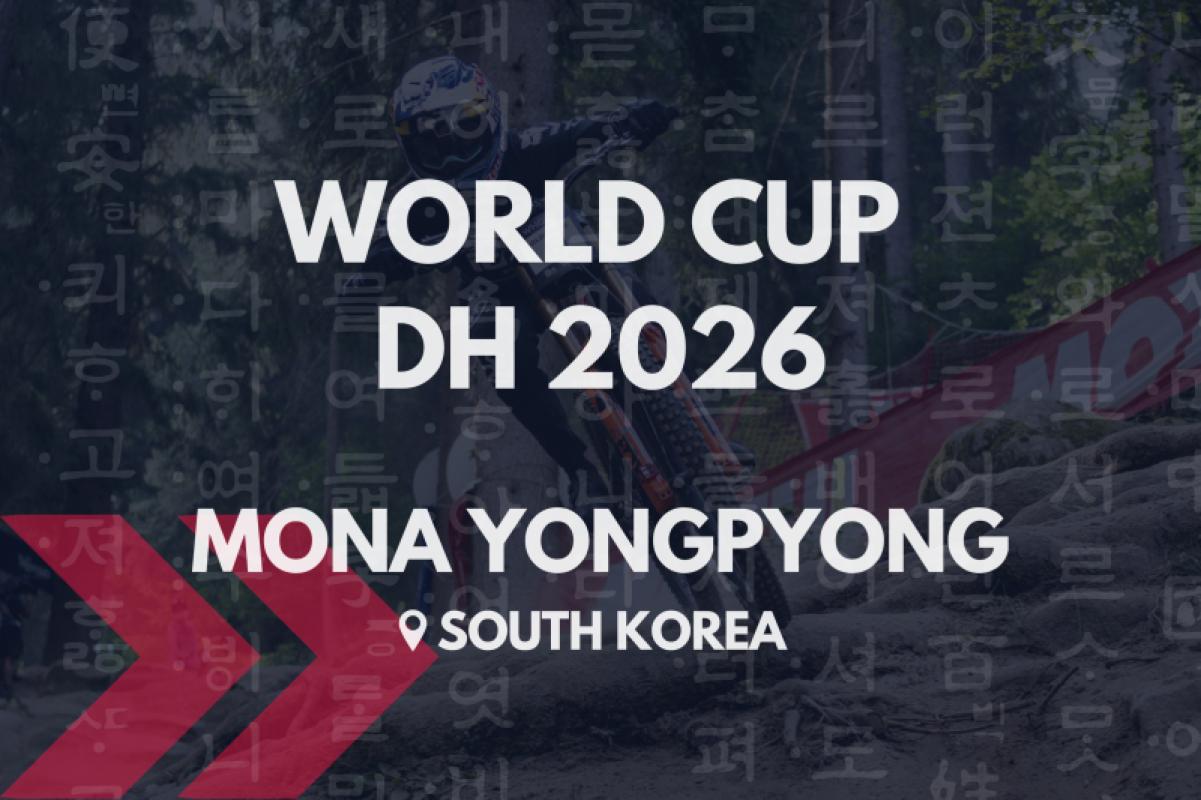
DH Korea 2026: Vali debuts on Commencal as a new era kicks off in Asia
Analysis and prediction for the first round of the 2026 DH World Cup at Mona YongPyong: downhill returns to Asia after 25 years.
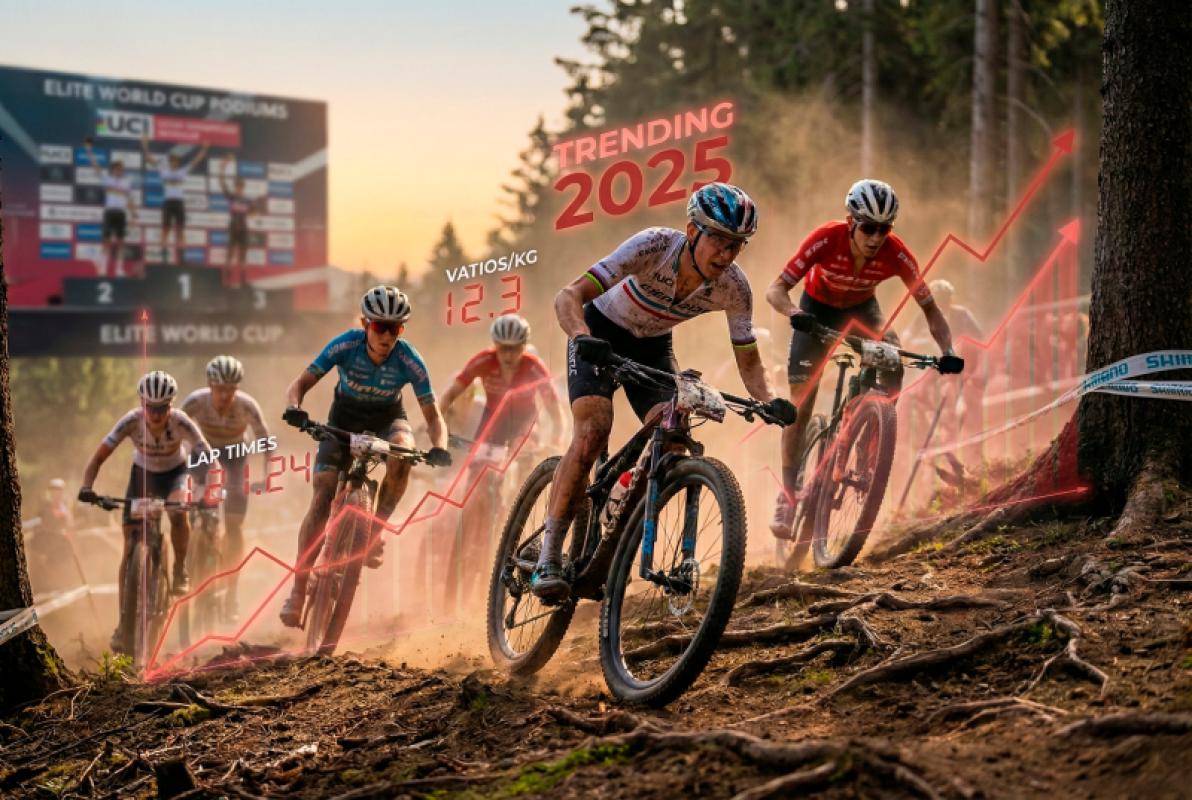
If you look at a recent World Cup podium, it is easy to get the impression that XCO has become "Gen Z" territory. Faces like Puck Pieterse, Tom Pidcock, or Loana Lecomte storming the Elite category without asking for permission have changed the narrative. But is this just a perception, or a statistical reality?
We have deeply analyzed our "Avg Ages Riders" chart and the Top 10 data from the last 5 years to answer the big question: Are we facing a definitive changing of the guard, or just a statistical anomaly?
When crossing data from our UCI rankings and World Cup results, we observe a fascinating trend. Historically, the "golden age" of a cross-country mountain biker was situated between 27 and 29 years old (the maturity era of Absalon, Hermida, or Gunn-Rita Dahle).
However, in the last five years, the curve has flattened and shifted to the left.
The Female Phenomenon: This is where the revolution is most drastic. With the arrival of Puck Pieterse (winning the overall at 21 in 2023) and Loana Lecomte (dominating in 2021, also at 21), the average age of the women's Top 5 has dropped to 23-24 years old in several races.
The Male Case: Here, the resistance is stronger. Although figures like Charlie Aldridge (World Champion at 23) or Martin Vidaurre are pushing the average down, legends like Nino Schurter (winning World Cups at 37 and 38) keep the Top 10 average stable, still hovering around 26-27 years old.
Our chart doesn't just show numbers; it tells a story of technical and physical evolution. Why are today's 20-year-old riders beating the veterans—something unthinkable a decade ago?
It is no coincidence that the leaders of this revolution (Pidcock, Pieterse, Van der Poel) come from CX. These are riders accustomed to agonizing 60-minute efforts since their Junior days. Modern XCO, with 1h 20m races, looks more like a long Cyclocross race than the 2h 30m marathons of the 90s. This favors youthful explosiveness over veteran endurance.
The UCI has transformed the circuits: shorter, more artificial, and extremely technical.
The Technical Factor: "Gen Z" riders have grown up with bike parks and modern full-suspension bikes. Their technique is native, not learned. While a veteran relies on experience to choose a line, a young rider like Jackson Goldstone (in DH) or Aldridge in XCO simply "plays" with the terrain.
The introduction of XCC has changed training. It is no longer enough to be a diesel engine; you need the spark of a dragster. This physiological demand for high intensity biologically favors younger bodies, allowing them to shine on Friday and maintain that momentum on Sunday.
It would be a mistake to say that XCO is only for the young. In fact, our analysis shows a polarization rather than a total rejuvenation. While the Top 10 fills up with U23 graduates, the consistent winners still possess experience.
Victor Koretzky and Jenny Rissveds continue to win well past their 30s.
This tells us that, although you reach the elite level sooner, longevity has also increased thanks to sports science. The competitive window has opened at both ends: you can win at 21 and at 35.
The answer from the data is: Yes, but with nuances. XCO has stopped being a sport of "late-blooming endurance" to become a discipline of early explosiveness. You no longer need to "get old" to build the physical base necessary to win.
If you are a Team Manager looking at our Avg Ages chart, the reading is clear: if you haven't signed your future star before they turn 20, you are probably already too late. The "Youth Revolution" is not a passing fad; it is the new performance standard of modern Mountain Biking.